Sunday, February 13, 2011

"Webby": Android-Powered Mini Computer

webby


Webby is a "suite of widgets and little apps" including internet radio, email, RSS, and an alarm.

For hardware? 600mhz ARM CPU, 256mb ram, 2gb internal falsh, SD and USB expansion, 3.5" touchscreen, 320x240 resolution, wifi 802.11b/g/n with Android 2.1.

The down side? No social network ability.

(via Engadget)

Friday, February 11, 2011

Sheldon Lurves Android: the Big Bang Theory

Check out this screenshot from the Big Bang Theory showing one of the adorable DYZ Plastics Android collectible:

Sheldon Big Bang Theory Android Collectible

(Noticed by an AndroidCentral reader.)

Adorable Mini Android Collectibles (Series 2 Coming Soon)

Check out these awesome and cute Android collectibles.

There is currently only 1 series (check out the link) at the moment. Series 2, however is coming soon.

Hopefully these are exceptionally popular so that they make a series 3!

(via DYZPlastic Series  2 & DYZPlastic Series 1)

Android s2 cupcake pre

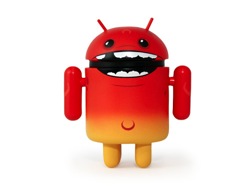
Android s1 3aAndroid vampire 1a


Google is the New Microsoft?

Check out the reasons and explanations why at PCWorld.

Highlights from PCWorld:

1. Core Dominance

The most obvious similarity between Microsoft and Google involves each company's ability to dominate its core industry. Microsoft has had well over 90 percent of the desktop operating system market since the days of Windows 95 and Windows XP. There are signs that Microsoft's dominance may drop significantly in the next few years due to the proliferation of devices running mobile operating systems, but Windows is still the king of the desktop.


2. Monopoly Mania

The downside of dominating an industry is that you're an immediate target for antitrust allegations. Microsoft experienced this during the late 90s and early 2000s, with accusations of unfair business practices against competitors such as IBM, Real Networks, Gateway, Netscape, and Apple.


3. It's the Platform, Stupid

The core strategy for both Microsoft and Google has been to create a platform that keeps the user in each company's ecosystem. Microsoft led the way in the 1990s by distributing the most popular desktop operating system ever and offering tools that played nice with Windows, such as Microsoft Office, Internet Explorer, and early online "cloud-based" services like Hotmail.

PC vs. Mac

4. Apple Rivalry

Microsoft is the new IBM, Google is the new Microsoft, and Apple is the new...Apple?


After the release of Windows 95, Microsoft ate away at Apple's business, driving the Macintosh maker into a niche market. Microsoft's strategy of distributing Windows on as many platforms as possible was a huge success, a contrast to Apple's distributing of the Mac OS only on its own computers.


5. From Rebel to Lumbering Giant

Microsoft started out as the plucky disruptor that popularized the PC graphical user interface through wide distribution and lower pricing compared with Apple's Macintosh OS. In a similar vein, Google was able to dominate search thanks to its amazingly relevant search results and its bare-bones homepage that featured the search box and nothing else.


6. Trust Us

Believe it or not, Microsoft, not Google, was once seen as the big, scary technology company trying to steal your data. In 1999, Microsoft had to address suspicions that the National Security Agency had a backdoor into Windows that allowed the NSA to peek at users' encrypted data. Then, in 2001, Microsoft revealed a big plan for its Passport universal sign-in feature, which would store each user's name, password, address, e-mail address, and credit card credentials online to encourage people to shop on the Web. The Passport plan was met with fierce opposition, however, because no one wanted to trust Microsoft with their data.


7. Hooked on Googlesoft

GooglesoftWant to get people to use your stuff and forget about going with the competition? Just pile some basic tools into your platform that are handy and free. Microsoft first bundled Internet Explorer with Windows to battle Netscape. Other tools packed into Windows include MSN Messenger, WordPad, and integration with Hotmail--and who can forget MSN Explorer for that AOL-like experience? Google has taken Microsoft's free-software strategy to the extreme with Google Docs, Gmail, Google Translate, Google Voice, Calendar, and Google Maps turn-by-turn navigation in Android. Google has also been accused of favoring its own products--such as Google Maps and YouTube--in its search results.


8. Competition Crusher


A tweak in Google's algorithm can send online businesses reeling from a significant drop in Web traffic. This is part of the reason the European Commission is looking into Google's search practices following antitrust complaints from sites such as price-comparison service Foundem and French law-related search tool eJustice. Microsoft's tactics, in its heyday, were far more aggressive: For example, the software giant was accused by RealNetworks of pressuring PC makers not to install RealNetworks software on Windows PCs by default. And IBM said Microsoft pressured manufacturers not to offer computers running IBM's OS/2 system.


9. Me-Too Products

NewImage


Despite each company's dominance, both Microsoft and Google have tried to insert themselves into business areas that have never quite worked out for them. After TiVo was introduced, Microsoft attempted to break into the DVR market with its own version called Ultimate TV. Microsoft's Virtual Earth mapping program followed Google Earth, and the Zune MP3 player followed Apple's iPod.


10. Brain Drain

Google headquartersInside Google's headquartersOnce upon a time, every software engineer wanted a job at Microsoft. It was the "it" place to work, thanks to the company's healthy compensation packages and exciting projects. Google eventually overtook Microsoft as a desirable place to work, offering perks such as free laundry rooms, dry cleaning, snacks galore, recreation rooms, bouncy balls for work stations instead of chairs, and the much-ballyhooed 20 percent time for working on experimental projects.

Science Fiction Author, Jules Verne Honored in Google Doodle on 183rd Birthday

Google doodle jules verne

Jules verne

Today's Google Doodle is in reference to French science fiction author Jules Verne's "20,000 Leagues Under the Sea". Fitting, as today would have been his 183rd birthday.

Author of other well known novels, "a Journey to the Center of the Earth" and "Around the World in 80 Days", Verne is regarded as one of the fathers of science fiction.

Born in 1828, long before the technological marvels of our time, Verne wrote about technologies such as space flight, airplanes, and submarines.

(via theGuardian, image from Wikipedia)

Google Doodle: Pac-Man Logo

Google doodle pacman logo

Speaking of awesome Google Doodles / logos. I hadn't seen this one back in May but check out the awesome Pacman Logo that Google made. They still have it up due to it's immense popularity. Google created the Doodle for the 30th anniversary of Pacman, back in May 2010.

Anyway, check out the page. It's interactive! Insert a coin and remember the 80's in all it's glory!


PACMAN FACTS:

Pacman arcade

Pacman mania grew so large that it had an animated television series (Pac-man: the Animated Series, 1982-1983) and a top ten hit single (by Buckner & Garcia, peaked at #9 in March of 1982)!

When Pac-Man was released, it created a new game genre that appealed to both genders, deviating from the videogame norms of Space Invaders, Asteroid or Pong.

Pac-Man was based off a Japanese folk hero named "Paku" who was known for his appetite. The original Japanese name for it was "Puck Man".

The game was only moderately successful in Japan. Upon release in the United States in 1980 however, the game took off, and took the title of "Best Selling Arcade Game" from then title-holder "Asteroids".

Pac-Man was the first videogame to feature power-ups and cut scenes.

Weird Al Yankovic titled a song "Pac-Man" in a parody of the Beatles "Tax-Man".

Hip-hop Emcee L'il Flip sampled sound from the game in his single "Game Over", which reached the top-20. Namco eventually sued Sony Music regarding this.

Billy Mitchell was the first person to achieve a perfect play score in July of 1999 after playing for 6 hours. He beats his score again though, in 2009, when he achieved the perfect play score in only 3hrs, 40m.

Today's Google Doodle Honors Thomas Edison

Google Doodle Thomas Edison Feb 11

American scientist and businessman, Thomas Alva Edison was born February 11, 1847. Edison created many inventions, including the phonograph, the motion picture camera, and a long-lasting, practical electric light bulb. Edison held 1,093 US patents in his name, as well as elsewhere in the world. He also invented a stock ticker, a mechanical vote recorder, a battery for an electric car, electrical power, recorded music and motion pictures.


Thursday, February 10, 2011

"Google’s closeups intrude on the art experience" Boston.com

I think the writer, Sebastien Smee, needed a different angle on the Google Art Project, and so chose to essentially diss Google, calling the project "underwhelming".

I'm not sure what Mr. Smee was hoping for. You are viewing the art on a small monitor (in comparison to a large room).

State hermitage museum google art project

Personally, I feel that the Google Art project is outstanding, as in it stands out from anything else previously done. Is it perfect and complete? No.

The author brings up some valid points IF you think the Google Art Project is trying to give people a better way to view art.

I guess it is important to have the right viewpoint upon entering the website. Will this be exactly like going to a museum? Uhm, no. Will the exceptionally inventive and progressive technology that Google uses capture the essence of the art on the site? Uhm, no.

Check out the comments, to see how others viewed the article.

Check out the Google Art Project.

(via Boston.com)


Wednesday, February 9, 2011

"MicroKia" - Microsoft and Nokia Partnership Likely

Microsoft and nokie partnership likely

Nokia is spiralling downward. Everyone seems to be aware of it. The question is: whose hand will it try to grab? Microsoft or Google?

Bloomberg and Engadget seem to agree that it'll be Windows 7.

Either way, it'll be interesting.

(via Engadget)

Monday, February 7, 2011

The Motorola Xoom Will Bring Android and Google to the Tablet Table

Motorola Xoom Android

When the iPad released, it was sensational to see the future of mobile computing coming to life. Apple has enjoyed a mostly uncontested reign so far. This year, there is a host of amazing tablet devices coming, which should provide a much more interesting battleground.

Most notably, the Motorola Xoom is poised to give the iPad the ass-kicking it needs and the Super Bowl commercial drove the point home nicely.

Yes, Apple has brought some amazing things out, things that just work and was just what the world wanted. It's 2011 though. Move over Cult of "I". There's something better on it's way.

Watch the Motorola Xoom Super Bowl ad at YouTube.

Check out the in-depth article over at ZDNet.

Google Chrome Links to New Web App Store

Google chrome app store

Chrome Version 9 is out with more complete integration of it's new app store, and allowing for Google's dream of cloud based / internet applications to come closer to reality. The new app store will also bring a new level of monetization for companies to sell their products.

The apps aren't that much different than a web app like Google Docs. It is however able to make better use of existing technologies (and of new ones as they arrive).

Check out the full article at PracticalECommerce.

Dual Screen Kyocera Echo: An Interesting Oddity, Potentially Awesome

Kyocera echo

The dual-screen Kyocera Echo smartphone being released for Sprint is a unique device that allows for better multitasking or just have the ease of viewing available to a 4.7 inch screen. Sprint and Kyocera have said that this is not the only dual screen device being released.

It is a little reminiscent of the Nintendo DS in design.

The Kyocera Echo allows you to use the Android device with the single screen. While using the device as a large 4.7" tablet isn't the most impressive due to the distracting center portion, there are certain innovative uses for the second screen.

Imagine the ease of typing emails, texts or documents on an oversized keyboard?

One of the drawbacks is the fact that it is only single core, and encourages multitasking as well as possible battery usage from powering two screens.

Check out lots of pictures of the Kyocera Echo and much more information at PCMagazine.

Google I/O Tickets Sell Out in Less Than an Hour

Google io tickets sellout hour

Tickets for Google's annual developer conference, aka Google I/O, began selling this  morning, $450 a pop, soon after 9am. Under an hour later, Vic Gundotra, Google Vice President tweeted the news that tickets were sold out.  The 2009 conference took 90 days and 2010 conference took 50 days to sell out. Google must be doing something right.

This year, Google platforms are much more established. A bevy of android phones are out and Chrome has made a name for itself. The rumors and updates of even more powerful and awesome devices are plentiful for 2011.

Google I/O is on from May 10-11.

(via TechCrunch)

Saturday, February 5, 2011

Google Earth Assists in Locating Almost 2000 Archaeological Sites in Saudi Arabia

Australian archaeologist David Kennedy says he has identified nearly 2000 potential archaeological sites in Saudi Arabia.

"I've never been to Saudi Arabia. It's not the easiest country to break into," said Kennedy. (New Scientist magazine) How did he manage to locate the sites?

"Google Earth can outflank them," he said.

Kennedy scanned approximately 1240 square kms to find the 2000 sites and believes they could be up to 9,000 years old. Physical verification will be required.

(via HindustanTimes)

Google Art Project is Up and Running (and Amazing!)

Screen shot 2011 02 01 at 1 42 23 pm

Google and 17 international art museums have brought a world of art (over 1000 pieces) to your fingertips, using Streetview technology.

Google Art Project has the sophistication expected for art coupled with Google's understanding of what a person would want with such a sight. For example, you can view the actual rooms the art are hung in and also zoom in for ultra detail.

The project came into fruition because of Google's famous "20%-time" policy, where 80% of the time, staff works on assigned tasks, and 20% they are to work on their own ideas. Gmail, Google Talk, Google Sky, Google News, Orkut and now Google Art Project

“It started when a small group of us who were passionate about art got together to think about how we might use our technology to help museums make their art more accessible—not just to regular museum-goers or those fortunate to have great galleries on their doorsteps, but to a whole new set of people who might otherwise never get to see the real thing up close,” Amit Sood on the Google Art Project blog.

Google will no doubt be adding more museums and art as time progresses and the site's traffic increases.

(Information and image via GoogleArtProject)